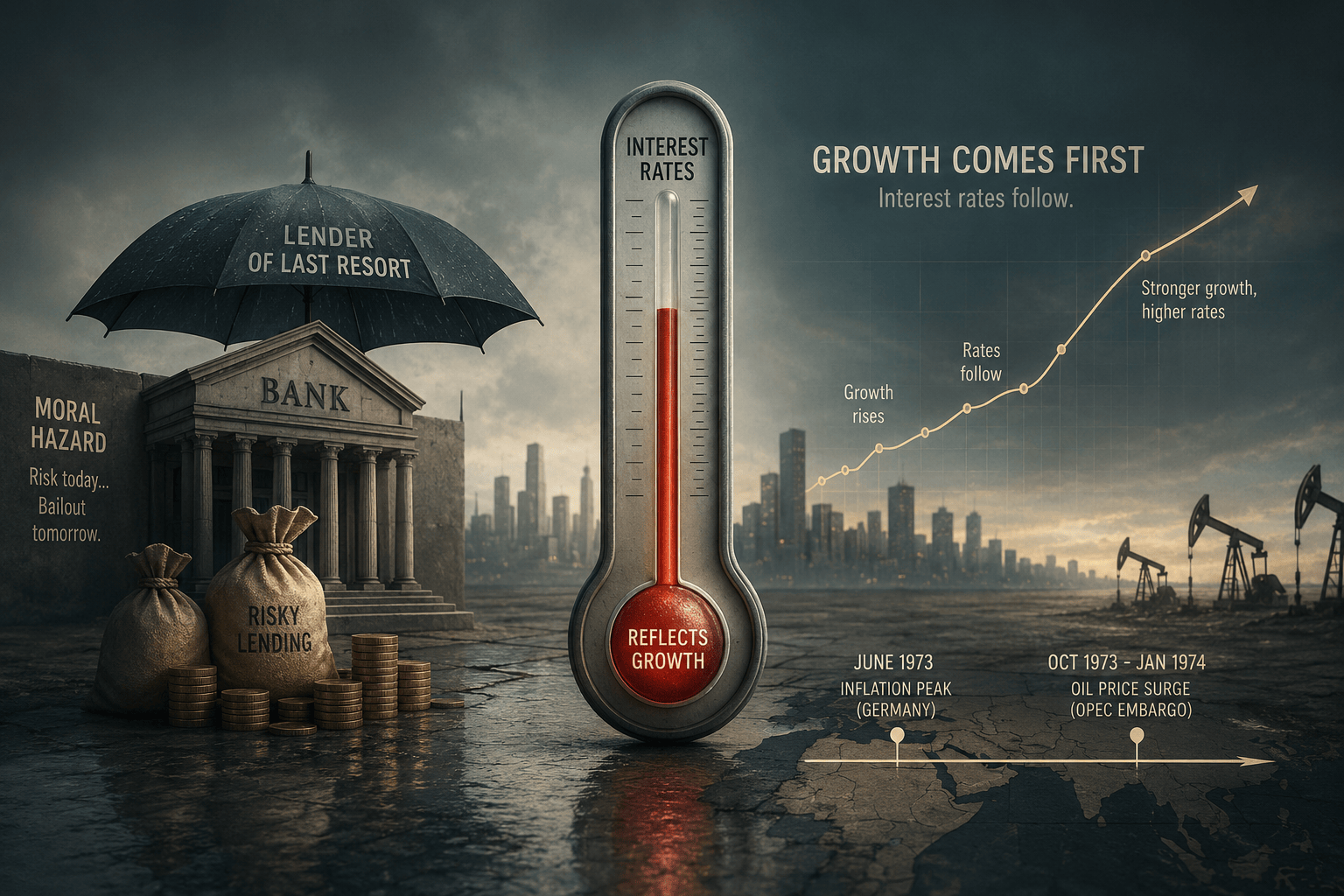
Of all the ideas Richard Werner challenges, this is the one I found hardest to accept, simply because it is repeated so constantly, by so many credible people, that it stopped feeling like a theory at all. Every time a central bank meets, every financial news segment, every economics class I ever sat through treated one thing as settled: lower interest rates stimulate economic growth, and higher interest rates slow it down. It is presented less as a hypothesis and more as a law of nature. Werner's argument, built on the same instinct for empirical testing that drove his work on bank credit creation, is that the arrow of cause and effect here has been pointing the wrong way the entire time.

In the first article, I walked through how a bank creates brand new money the instant it approves a loan — not by moving existing funds, but by writing a matching asset and liability into existence on its own balance sheet. That single fact, once you actually sit with it, changes how you have to think about almost every other number in economics. The one I want to focus on here is GDP

I always assumed a bank worked the way a moneylender works, just at a bigger scale. Someone deposits money, the bank holds it safely, and then lends that same money out to someone else, keeping a small cut for itself. That is what I was taught in my very first economics class, and it is what almost every bank advertisement quietly implies when it shows a vault full of your money. After listening to Richard Werner walk through how banking actually works down to the level of individual accounting entries I realized that story is not just simplified. It is wrong. And the way it is wrong matters enormously for anyone trying to understand inflation, recessions, and financial crises.

দীর্ঘদিন ধরে শুল্ক ব্যবস্থাপনাকে একটি প্রয়োজনীয় প্রশাসনিক কার্যক্রম হিসেবে দেখা হয়েছে—জটিল, কারিগরি, এবং প্রায়শই এটি বড় বড় বহিরাগত এজেন্ট বা স্থানীয় বিশেষজ্ঞ সেবাদাতাদের হাতে ছেড়ে দেওয়া হয়। অতীতে তুলনামূলকভাবে স্থিতিশীল পরিবেশে, বহু প্রতিষ্ঠানের কাছে এটি ছিল “পর্দার আড়ালের কাজ”—উচ্চপর্যায়ের নির্বাহী সিদ্ধান্তগ্রহণ থেকে দূরে।কিন্তু এই মানসিকতা আর টিকছে না। বিশ্ব বাণিজ্য সংস্থা (WTO), বিশ্বব্যাংক এবং UNCTAD-এর তথ্য অনুযায়ী, ২০২৪ সালে বিশ্বজুড়ে শুল্ক কর্তৃপক্ষ আনুমানিক ৬০০ থেকে ৯০০ বিলিয়ন ডলার পর্যন্ত শুল্ক আদায় করেছে—যা বৈশ্বিক জিডিপির প্রায় ১%। বাণিজ্য উত্তেজনা বৃদ্ধি পেলে এই সংখ্যা দ্বিগুণ হতে পারে। একইসাথে, বৈশ্বিক বাণিজ্য ক্রমেই খণ্ডিত ও অনিশ্চিত হচ্ছে, উৎপত্তি-নিয়ম (rules of origin) কঠোর হচ্ছে, এবং কার্বন-সংক্রান্ত সীমান্ত ব্যবস্থা ও নিষেধাজ্ঞা বাড়ছে।
যুক্তরাষ্ট্রের প্রেসিডেন্ট ডোনাল্ড ট্রাম্পের পুনঃনির্বাচন বেইজিংয়ের সেই আশাবাদে তেমন একটা চিড় ধরাতে পারেনি যে তারা যুক্তরাষ্ট্রের পক্ষ থেকে আসা অব্যাহত হুমকি এবং বিশ্ব আধিপত্যের জন্য প্রতিদ্বন্দ্বিতা করতে পারবে না। এবং ট্রাম্পের দ্বিতীয় মেয়াদের শুরুর দিকের পদক্ষেপগুলো বেইজিংয়ের এই বিশ্বাসকে আরও দৃঢ় করেছে যে যুক্তরাষ্ট্র তার নিজস্ব পতনকে ত্বরান্বিত করছে, যা সমতার একটি নতুন যুগকে আরও কাছে নিয়ে আসছে। চীনের সম্ভবত যুক্তরাষ্ট্রের কাছ থেকে কোনো অস্তিত্বগত হুমকির মুখে পড়ার সম্ভাবনা নেই – এই ধারণা বেইজিংয়ের নীতিতে একটি স্থিতিশীল প্রভাব ফেলেছে।